
Troy, Michigan Schools Block Parent from Observing Child’s Class, Union Contract Actively Discourages Involvement
Keeping it Real with Dave Bondy, Sunday December 22, 2024

This is my Keeping it Real Show that airs on Sunday and Thursday It’s free now but in January will go behind a paywall. If you aren’t already a paid subscriber, I ask you to become on. I can’t do this without your support. Lock in now at $5 before it goes up to $6 in January.
WATCH ENTIRE SHOW HERE:
A Troy School District parent is raising concerns over what she describes as restrictive policies that discourage parental involvement, following her efforts to observe her daughter’s classroom. The issue has sparked debate about transparency, legal compliance, and the role of parents in Michigan’s public schools.
Michelle, the parent of a second grader with dyslexia, said she encountered significant delays last year when requesting to observe her daughter’s small group reading lesson. Despite being a cleared school volunteer, it took six weeks for the district to approve a 30-minute observation.
Click here to read the union contract
“As a former educator, I found it shocking,” said Michelle, who taught fourth and fifth grade for several years. “Parents are supposed to be partners in their child’s education, but this process didn’t reflect that.”
Michelle said her observation last year focused on how her daughter’s learning disability was being supported in the classroom. While the session was eventually granted, she said it raised broader questions about the district’s transparency.
Union Contract Limits Observations
Michelle’s concerns deepened this year with the release of a new teacher union contract. Although approved in June, the contract was not made public until December. Among its provisions, the contract states that Troy School District administrators “shall actively discourage” parent classroom visits, citing potential disruptions to learning.
“I understand you can’t have 15 parents in a room at once, but discouraging participation outright? That’s troubling,” Michelle said.
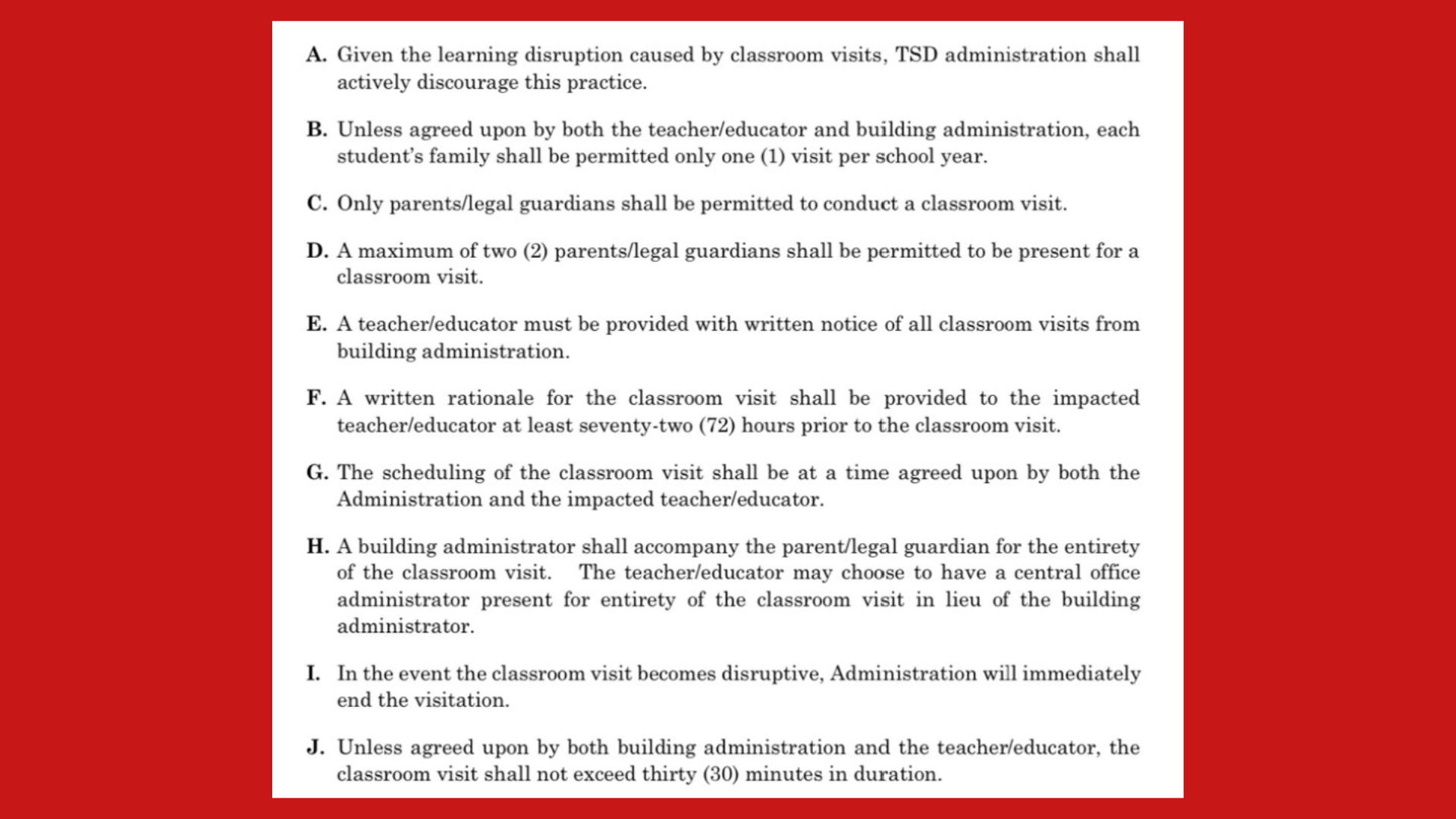
The district’s elementary school handbook previously allowed one classroom observation per marking period. Under the new rules, parents are limited to one visit per year.
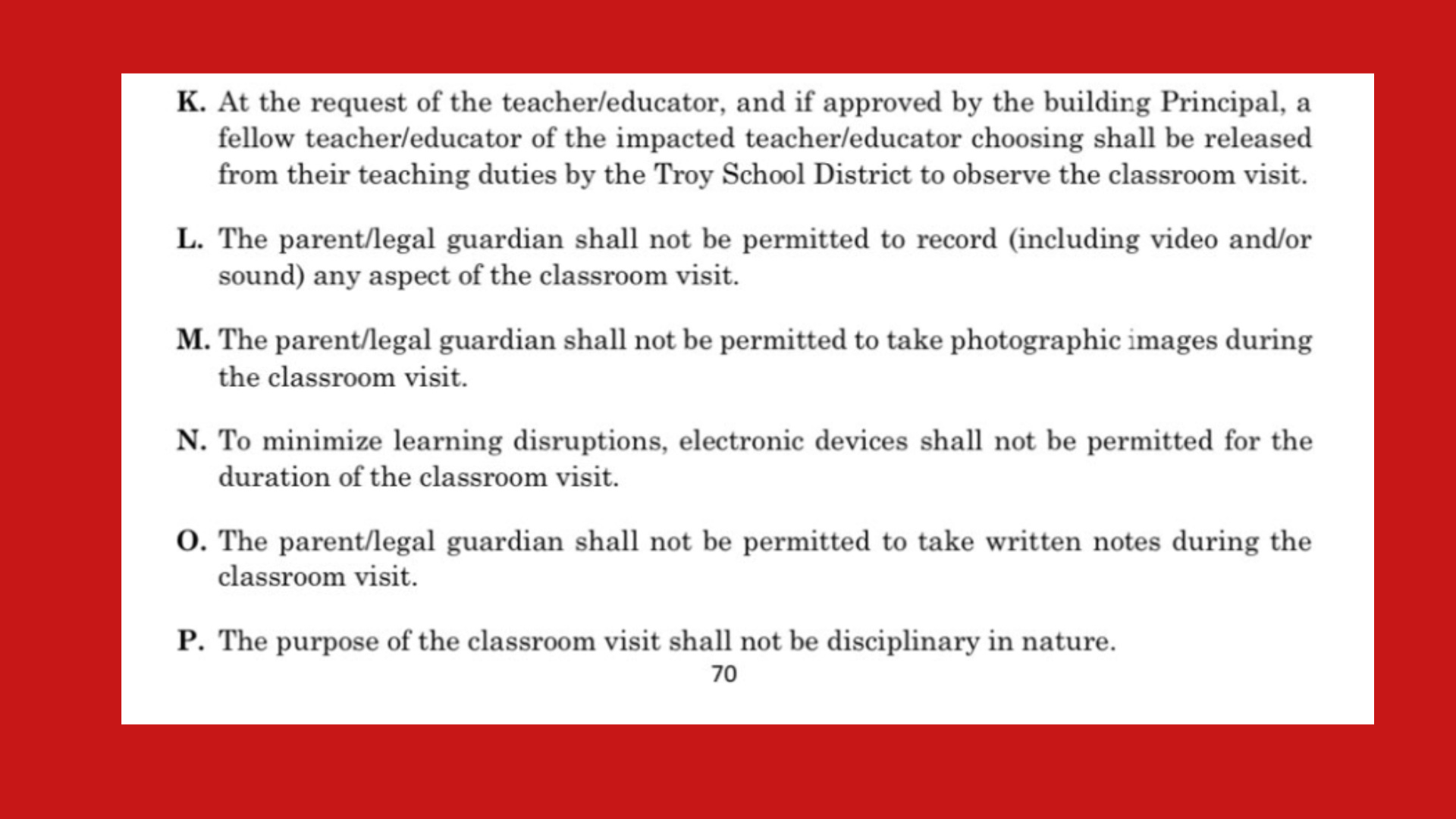
Additionally, the union contract outlines restrictions for classroom visits, including requiring parents to provide a written rationale at least 72 hours in advance. Visits are capped at 30 minutes, and parents are prohibited from taking notes or using electronic devices.
“These policies feel excessive,” Michelle said. “Why can’t a parent take notes to recall what they observed? And why is it necessary to justify observing your own child in a public school classroom?”
Denied a Second Observation
This fall, Michelle requested to observe her daughter’s small group reading lesson again but was denied. She said the principal told her she had already observed last year and would see “the same thing.”
“It’s a new school year, and my daughter’s needs have evolved,” Michelle said. “As her parent, I have a right to ensure she’s receiving the support she needs.”
After the denial, Michelle escalated her request to the district superintendent and assistant superintendent of elementary education but received the same response.
Transparency and Legal Questions
Michelle, who cited state law that supports parent observations, questioned whether the district’s policies comply with Michigan’s education code.
“There are also federal disability laws under the Americans with Disabilities Act that support parent involvement,” she said. “This raises serious legal and ethical concerns.”
Broader Implications for Michigan Schools
The restrictive policies in Troy’s union contract could set a precedent for other Michigan districts, Michelle said.
“Teacher union contracts often serve as models for neighboring districts,” she said. “If this language spreads, it could further limit parental involvement across the state.”
Education policy experts have raised similar concerns, noting that transparency and collaboration are key to building trust between schools and families.
School Choice Considerations
Michelle said her family considered private school options for her daughter but ultimately decided to remain in the public system due to limited availability. However, she remains open to exploring alternatives if the district’s policies don’t change.
“We visited several Catholic schools, and they were much more welcoming,” she said. “I was allowed to observe classrooms without any barriers, even though my daughter wasn’t enrolled there.”
Michelle also pointed to states like Florida and Arizona, where school choice programs allow funding to follow students to private or charter schools. She believes such policies could improve accountability in Michigan’s public schools.
“In Arizona, schools have to provide a quality education to compete,” she said. “Michigan’s public schools could benefit from similar accountability measures.”
Next Steps
Michelle is considering addressing the school board directly to advocate for more transparent policies. She has also weighed the possibility of legal action but said the financial burden makes it a challenging option.
“Parents shouldn’t have to fight this hard to be involved in their child’s education,” she said. “This isn’t just about my daughter. It’s about ensuring all children receive the support they need to succeed.”
The Troy School District did not respond to requests for comment.
Michelle said she hopes her story will inspire other parents to advocate for transparency in their own districts.
“This is an opportunity for improvement,” she said. “Parents need to be aware of what’s in their district’s teacher contracts and policies. Transparency and collaboration should be the standard.”
The Bigger Picture
Since the pandemic, Michigan public schools have faced increased scrutiny as families explore alternatives such as homeschooling and private education. Michelle said restrictive policies like those in Troy only add to public dissatisfaction.
“This kind of behavior is a commercial for homeschooling,” she said. “Public schools need to step up and be more welcoming to parents, or they risk losing students.”
Michelle plans to take the next few weeks to decide her next steps but remains committed to advocating for her daughter and other students with disabilities.
“Parents should not have to choose between fighting their school district and their child’s education,” she said. “It just seems like common sense.”
The other students in that class have rights too. This is most likely a helicopter mom who wants to stir up trouble
So glad my child is out of college. And the school board should be damned glad I don't have a child in their district. Because they'd all be out on their asses.