
MSU Republican Student Group Say Viral Post Forced University to Change DEI Language
Student group chairman says university revised wording tied to student organizations after criticism spread widely online.

EAST LANSING, Mich. — A Michigan State University student leader says the university quietly changed language in a student organization agreement after a social media post criticizing diversity, equity and inclusion requirements gained national attention.
Anton, chairman of the Michigan State College Republicans and secretary of the statewide Michigan College Republicans, said the Secretary of the student group noticed language in a terms and conditions agreement that student organization leaders are required to review and sign.
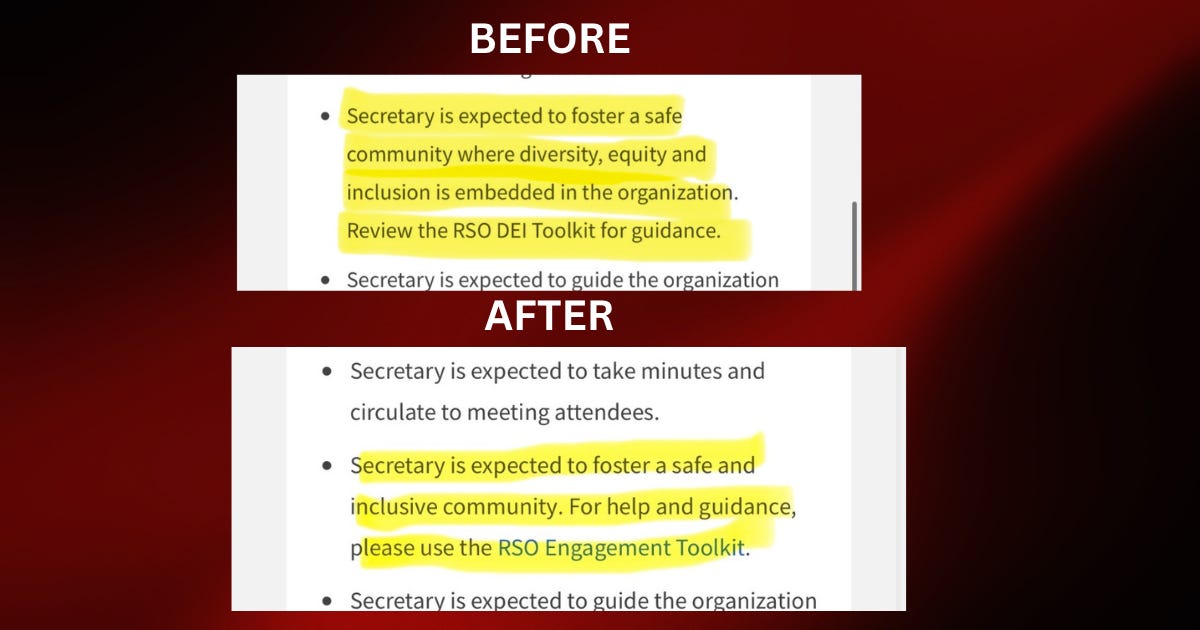
According to Anton, the agreement for student organization secretaries stated that they were expected to “foster a safe community where diversity, equity and inclusion is embedded in the organization.”
If you don’t already become a paid subscriber to support my independent journalism. I left the mainstream media to work for all of you. Click the button below.
The Michigan State College Republicans posted screenshots of the language on social media, arguing the requirement conflicted with President Trump’s efforts to eliminate DEI programs and policies at public institutions.
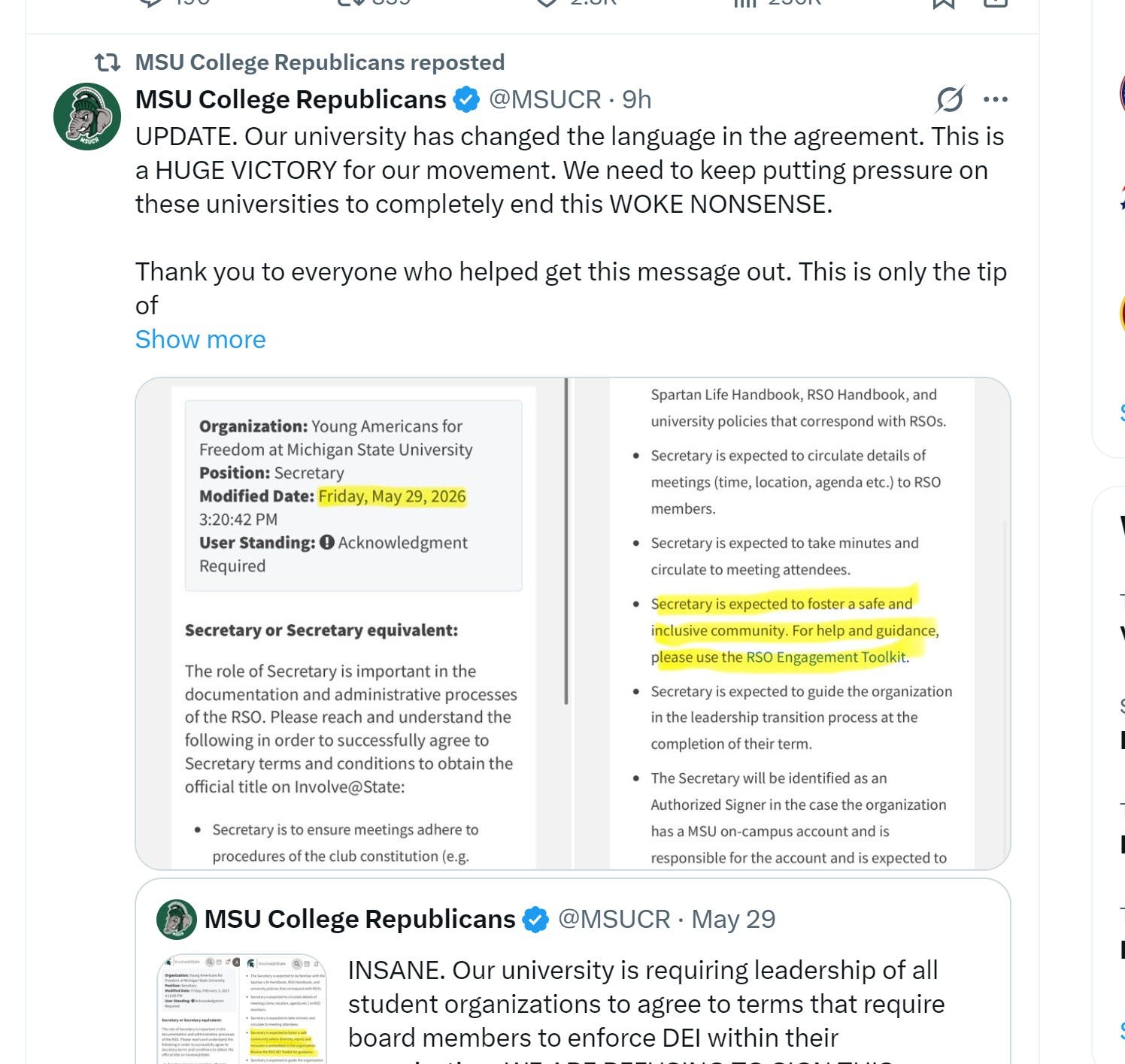
The post quickly gained traction online, receiving millions of views after being shared by several high profile accounts, including Libs of TikTok.
Anton said that within a day, the language appeared to change.
The updated version, according to screenshots provided during the interview, replaced the phrase “diversity, equity and inclusion” with language stating secretaries are expected to “foster a safe and inclusive community.”
“They did this with zero communication,” Anton said. “No emails, no announcement. They just changed it overnight.”
Anton believes the university responded directly to the attention generated by the viral social media post.
“They don’t want to address it,” he said. “They quickly changed the wording.”
While Anton objected to the original DEI language, he said he does not oppose efforts to create welcoming organizations.
“The inclusive community part is fine,” he said. “I would love my secretary to sign it.”
The disagreement, he said, centers on the inclusion of DEI language in official university documents.
During the interview, Anton also pointed to other university materials he believes demonstrate DEI remains embedded within Michigan State’s culture and policies.
He referenced a student rights and responsibilities handbook that includes references to the university’s commitment to diversity, equity and inclusion.
Anton argued those references appear inconsistent with previous university announcements regarding changes to DEI related practices.
Michigan State University previously announced changes to certain DEI related positions and programs following federal policy changes and legal developments affecting higher education institutions nationwide.
The university has not publicly linked the wording change in the student organization agreement to the social media controversy.
The debate comes as colleges and universities across the country continue to face pressure over DEI initiatives.
Supporters of DEI programs argue they help create welcoming environments for students from different backgrounds and can improve campus culture by encouraging participation from a broad range of students.
Critics argue DEI programs can place too much emphasis on race and identity and may conflict with principles of equal treatment.
Anton said he believes universities should focus on treating students as individuals rather than emphasizing identity based categories.
He also questioned materials included in a DEI toolkit referenced within the student organization guidance.
According to Anton, some of the toolkit’s language suggests organizations with diverse backgrounds and experiences may make better decisions and be more effective. He disagreed with that premise and argued universities should focus on differing viewpoints rather than identity characteristics.
Beyond the policy debate, Anton said conservative students often face challenges expressing their political beliefs on campus.
He described Michigan State as an environment where many students and professors lean politically left and said some conservative students are reluctant to publicly share their views.
“There are more people like you than some people think,” Anton said, encouraging conservative students to connect with like minded organizations and support one another.
He said his goal in speaking publicly is to ensure that students with minority viewpoints do not feel isolated.
“Usually these minority opinions are the ones made to feel like they’re the villains,” he said.
The controversy highlights the ongoing national debate over diversity, equity and inclusion programs at public universities, a discussion that has intensified since President Trump’s return to office and subsequent executive actions aimed at limiting DEI initiatives in federally funded institutions.
I have reached out to the university and have not yet heard back from anyone. If I do get a statement I will update this article.
I totally agree. Many consevatives are afraid to voice their opinions. Also students need to be treated as individuals. Not herded into a category that fits what/where that student should be placed. DEI is a racist program, it's divisive not inclusive at all. I don't think anyone feels safe in the environment that uses it. It discriminates against people no matter who they are or what their cultural background is.