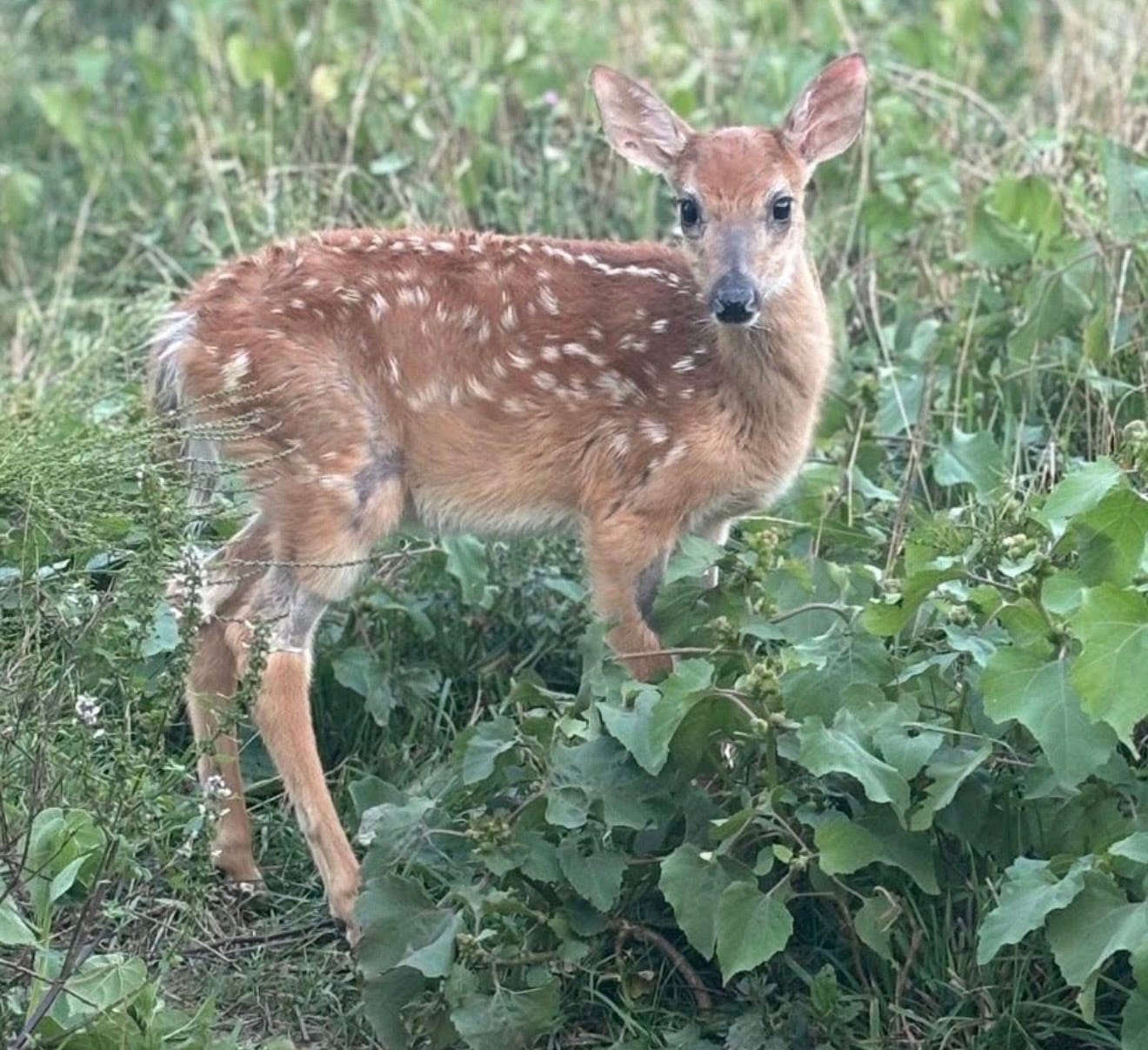
DNR to Grant Permit to House Injured Fawn, Amid Wider Debate over Wildlife Rehabilitation Authority.

LANSING, Mich. (AP) — The Michigan Department of Natural Resources has broken from standard practice by granting a permit for a partially sight-impaired fawn to remain at a licensed facility permanently, rather than being released or euthanized under state wildlife rules.
Rep. Angela Rigas, along with a bipartisan coalition of lawmakers, sent out the news release announcing the decision and called for the DNR to allow more flexibility in how nonreleasable wildlife is treated.
Make sure you are not missing out and getting this free newsletter sent to you. Sign up now.
The permit allows the fawn—whose vision impairment was determined by a veterinarian to render it nonreleasable—to be housed under Michigan’s live wildlife program for educational and sanctuary purposes. The facility’s name has been kept private to allow the animal time to acclimate.
Under current state regulation, rehabilitated fawns must typically be released by Oct. 1 to re-establish food sources before winter. If they remain in care beyond that deadline, euthanasia is often ordered because of concerns about their long-term survival in the wild.
But in rare cases, the DNR may issue a so-called “Live Animal Programs” permit that permits permanent human care for unreleasable wildlife—if strict criteria are met, including proof the animal cannot survive in the wild, lawful holding, and acceptable facility standards. Officials said the fawn meets those criteria.
John Pepin, deputy public information officer for the DNR, said the decision “drew tremendous bipartisan support from legislators and people across Michigan and beyond.”
Context, conflicts, and past reporting
This case comes amid mounting tension between the DNR and wildlife rehabilitation advocates, especially those who say the agency’s permitting process is opaque, rigid, and often dismissive of animals that cannot survive independently.
Dave Bondy has tracked this debate in previous reporting. In his series “Wildlife Rehab Permitting Under Scrutiny,” he documented multiple cases of delay, denial, or euthanasia where rehabilitators appealed for exceptions. In “DNR vs. Rehabilitators: Authority and Transparency,” Bondy chronicled how rescues like the Detroit Animal Welfare Group have clashed with the state over accountability and permitting. And in “When Release Isn’t an Option,” he questioned whether the state’s deadlines and rules adequately address the fate of animals that cannot return to the wild.
Those earlier stories established how unusual it is for the DNR to approve lifetime permits like this one. Observers say this new case may represent a turning point—or at least an experiment—in how the state responds to appeals from wildlife advocates.
Still unresolved are pending legal conflicts. The DNR is in litigation with DAWG over other animals, including a coyote under its care, which are currently before an administrative law judge.
What to watch next
Whether this permit becomes precedent or remains an exception
If Rep. Rigas and her lawmakers push legislation to codify broader exceptions or clearer appeals processes
How the agency handles transparency around permit denials and approvals
Whether the administrative court rulings in the DAWG cases reshape the DNR’s authority in these matters
For now, the fawn will remain in human care, a rare exception to Michigan’s strict wildlife release and euthanasia norms. The decision offers a new flashpoint in the ongoing debate over how a state should treat wild animals that cannot survive on their own.